
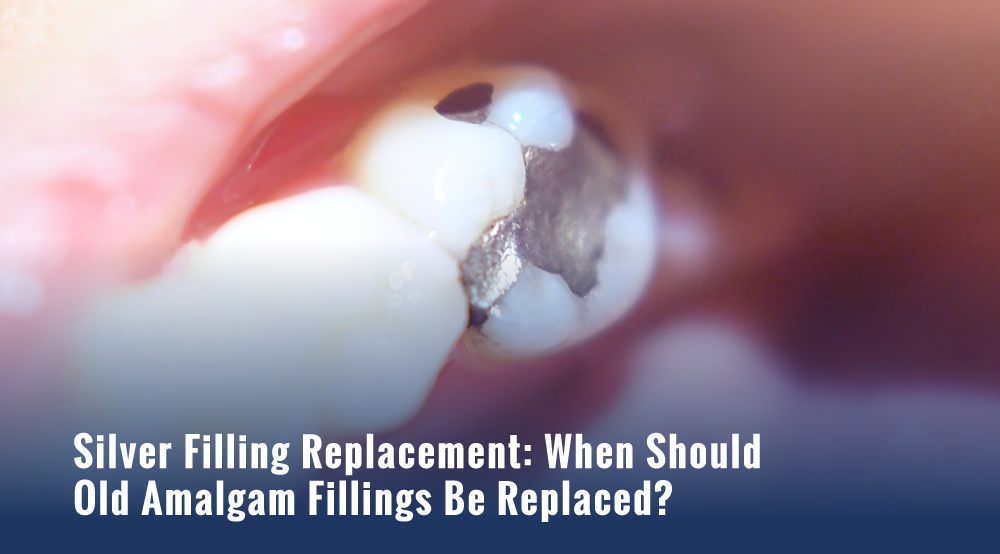
Old silver fillings do not need to be replaced simply because they have been in your mouth for many years. Replacement is generally considered when a filling is cracked, loose, worn, leaking at the edges, surrounded by new decay, or no longer providing enough support for the remaining tooth.
Patients considering silver filling replacement in Thousand Oaks should have older restorations examined rather than relying on age alone. A dentist can evaluate the filling, surrounding enamel, bite, and X-rays when appropriate to determine whether the restoration remains functional. If replacement is necessary, the next restoration may be a filling, onlay, or crown depending on how much healthy tooth structure remains.
What Silver Amalgam Fillings Are and How Long They Last
Dental amalgam has been used to restore cavities for generations. The material is a mixture of metals that forms a durable restoration capable of handling significant chewing pressure.
There is no expiration date that automatically determines when an amalgam filling should come out. Some remain functional for many years, while others fail sooner because of the size of the restoration, chewing forces, tooth condition, grinding habits, or recurrent decay.
Regular examinations allow the dentist to monitor older fillings for changes instead of replacing them solely because of their age.
Signs an Old Silver Filling Needs Replacement
A failing restoration does not always fall out. Problems can develop gradually around or underneath it.
Signs that may warrant an amalgam filling replacement include:
- A visible crack in the filling
- A loose or moving restoration
- Part of the filling breaking away
- New sensitivity to hot, cold, or sweets
- Pain when biting
- Darkening or decay around the edges
- Food repeatedly catching near the restoration
- A fracture in the surrounding tooth
A cracked filling deserves particular attention because chewing pressure can place additional stress on already weakened tooth structure. An examination can determine whether only the restoration is damaged or the tooth itself has fractured.
Are Silver Fillings Safe to Keep?
An intact amalgam filling does not automatically need removal simply because it contains mercury.
The U.S. Food and Drug Administration states that existing amalgam fillings in good condition generally should not be removed solely for the purpose of preventing potential health risks. Unnecessary removal eliminates healthy tooth structure and temporarily increases exposure to mercury vapor during the procedure.
There are certain higher-risk groups for whom the FDA recommends avoiding new amalgam fillings when appropriate alternatives are available. Patients with specific concerns should discuss their medical history and existing restorations with their dentist rather than deciding to remove every silver filling automatically.
Composite Fillings vs. Amalgam: Key Differences
Composite fillings use a tooth-colored resin material that can be matched to surrounding enamel, making them much less noticeable than silver restorations.
Appearance is not the only difference. Composite material bonds to tooth structure, which can allow the dentist to restore a damaged area while preserving healthy portions of the tooth when clinically appropriate.
Tooth-colored fillings are commonly used for both visible teeth and many back teeth. However, restoration choice depends on factors such as cavity size, location, remaining tooth structure, moisture control, bite forces, and the amount of pressure the tooth receives.
Patients interested in silver filling replacement in Thousand Oaks can ask whether composite is suitable for the particular tooth rather than assuming every amalgam restoration can simply be exchanged for an identical-sized composite filling.
When a Crown or Onlay Is Better Than a New Filling
Removing a large old restoration can reveal that the remaining tooth is thinner or more compromised than expected.
In those situations, placing another filling may not provide adequate protection. An onlay can cover and reinforce vulnerable portions of the tooth while preserving more natural structure than a full crown in appropriate cases.
A dental crown covers more of the visible tooth and may be recommended when substantial tooth structure has been lost, the tooth has fractured, or another filling would leave it vulnerable to further damage.
The decision should be based on the condition of the tooth after the old restoration and any decay are removed, not simply on which option is newest or most cosmetic.
What to Expect during Filling Replacement
During amalgam filling replacement, the tooth is numbed and the existing restoration is carefully removed. The dentist then examines the underlying tooth and removes decay or damaged material when necessary.
What happens next depends on what is found.
If sufficient healthy tooth remains, composite fillings may provide an appropriate replacement. If the old restoration was very large or a fracture is discovered, the dentist may recommend an onlay or crown instead.
The bite is checked after the new restoration is placed. This step matters because even a small high spot can make a newly restored tooth uncomfortable when chewing.
Replacing Silver Fillings at a Thousand Oaks Dental Office
Restorative dentistry in Thousand Oaks should begin with determining whether an older filling actually needs treatment.
During an examination, the dentist can evaluate the margins of the restoration, look for visible fractures or decay, assess the surrounding tooth, and use dental X-rays when indicated. That information helps distinguish a stable older restoration from one that is beginning to fail.
If an amalgam filling replacement is recommended, ask why the restoration needs to come out and what will replace it. The best option may be a tooth-colored filling for a smaller area, an onlay when additional coverage is necessary, or a crown when the tooth requires greater structural protection.
Replacing a failing restoration at the appropriate time can address decay or damage before more of the tooth is compromised. At the same time, monitoring a healthy, functional filling can avoid unnecessary dental work.
Summary
Silver fillings should generally be replaced because of their condition, not simply their age or color. Cracks, looseness, recurrent decay, sensitivity, damaged margins, and fractures in the surrounding tooth can indicate that treatment is necessary. An evaluation for silver filling replacement in Thousand Oaks can determine whether an old restoration remains serviceable and, when replacement is needed, whether a composite filling, onlay, or crown offers the appropriate level of protection.
Frequently Asked Questions
How do I know if my old silver filling is failing?
Pain when biting, sensitivity, visible cracks, looseness, broken edges, or changes around the filling can indicate a problem. Some deterioration produces few symptoms, which is why routine dental examinations are important.
Should all old amalgam fillings be replaced with composite?
No. An intact, functional amalgam restoration does not automatically require replacement. Treatment should be based on the condition of the filling and tooth as well as the patient’s individual circumstances.
Can a large silver filling weaken a tooth?
A tooth containing a large restoration may have less remaining natural structure. If the tooth or filling develops cracks or other damage, an onlay or crown may sometimes provide more protection than another large filling.
Will my tooth be sensitive after replacing a silver filling?
Temporary sensitivity can occur after restorative dental treatment. Contact your dentist if sensitivity is severe, worsens, affects your bite, or does not improve as expected.
Can I replace a silver filling just because I prefer a tooth-colored restoration?
Cosmetic replacement may be possible, but removing an intact restoration also removes some tooth structure and has potential risks. A dentist can explain the condition of the existing filling and the advantages and disadvantages of replacing it.
Ready to Replace Your Silver or Amalgam Fillings? Dental Group in Thousand Oaks
Considering replacing your fillings? If you live in the Thousand Oaks area, you need look no further than Newbury Dental Group for relief. Newbury Dental Group is a top dental clinic where you’ll receive the best of care. We offer services for quick and safe silver and amalgam filling removal so call today – (805) 375-9383.