
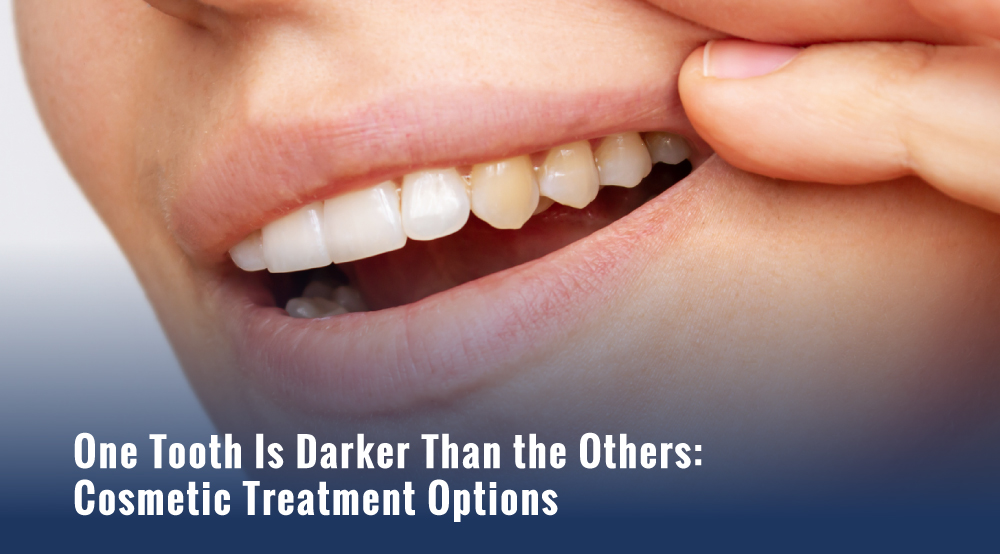
When one tooth is noticeably darker than the teeth around it, whitening your entire smile may not solve the problem. A single discolored tooth can be the result of trauma, changes inside the tooth, previous root canal treatment, decay, an aging restoration, or staining within the tooth structure. The appropriate cosmetic treatment depends on why the color changed.
A cosmetic dentist in Thousand Oaks can first determine whether the difference is purely cosmetic or related to the health of the tooth. Treatment for a discolored tooth may involve internal bleaching, bonding, a veneer, or a crown depending on the cause and condition of the remaining tooth structure. Finding the reason for the color change before covering it is particularly important when a tooth has recently become gray, brown, or noticeably darker.
Why One Tooth Turns Darker Than the Rest
Teeth can change color from the outside or from within. Surface stains from coffee, tea, tobacco, and foods tend to affect multiple teeth, while a single dark tooth is more likely to have an individual cause.
Possible reasons include:
- Previous trauma to the tooth
- Bleeding or changes within the pulp
- A previous root canal
- Tooth decay
- An aging filling or other restoration
- Developmental differences in the enamel or dentin
- Internal staining
A dark tooth after root canal treatment can develop because changes inside the tooth affect its color over time. Since the source of discoloration is internal, conventional whitening applied to the outside of the teeth may not produce the desired result.
When a Dark Tooth Signals a Health Problem
A color difference should not automatically be treated as a cosmetic issue.
If a tooth becomes darker after being hit, the pulp inside it may have been damaged. A tooth can also change color when the nerve is no longer healthy, even when there is little or no pain.
Contact a dentist if discoloration is accompanied by:
- Toothache
- Sensitivity
- Gum swelling
- A bump on the gum
- Pain when biting
- Recent dental trauma
- Chipping or cracking
- A sudden change in color
An examination and appropriate dental X-rays can help identify what is happening beneath the surface. Any active dental problem should be addressed before cosmetic treatment begins.
Internal Bleaching for a Single Discolored Tooth
Internal bleaching is different from conventional teeth whitening because the whitening material is placed inside a tooth that has previously received root canal treatment.
The dentist accesses the internal portion of the tooth, places whitening material inside, and temporarily seals it. Depending on the degree of discoloration and response, the process may need to be repeated before the final restoration is placed.
This approach can be useful for a dark tooth after root canal treatment when the tooth remains structurally suitable and the discoloration originates internally.
Single tooth whitening requires careful shade planning. The goal is not simply to make the affected tooth as white as possible. It needs to blend with the surrounding teeth.
Dental Bonding to Mask Discoloration
Dental bonding uses tooth-colored composite resin to alter the visible surface of a tooth. It may be an option when discoloration is accompanied by a minor chip, irregular shape, small gap, or another cosmetic concern.
With dental bonding in Thousand Oaks, the composite material can be selected and layered to help conceal the underlying color while blending with neighboring enamel.
Bonding is generally more conservative than placing a veneer or crown because less alteration of natural tooth structure may be required. However, it is not appropriate for every type or severity of discoloration. Very dark underlying tooth structure can be more difficult to mask naturally with composite alone.
Single Veneers or Crowns for Severe Staining
When internal bleaching or bonding cannot provide the desired result, a veneer or crown may be considered.
A porcelain veneer covers the front surface of the tooth and can change its visible color, shape, length, and proportions. Patients considering veneers in Thousand Oaks should understand that matching one veneer to several natural neighboring teeth can require careful shade and translucency planning.
A dental crown covers substantially more of the tooth and may be more appropriate when the tooth is already heavily restored, weakened, fractured, or requires greater structural protection.
The choice should be based on more than discoloration. Preserving healthy tooth structure while achieving a predictable result is an important part of treatment planning.
Matching One Tooth to the Rest of Your Smile
Treating one tooth can sometimes require more precision than changing an entire smile.
Natural teeth are not one flat shade of white. They contain differences in translucency, brightness, texture, and color from the gumline to the biting edge. A restoration that is simply “white” may stand out almost as much as the original dark tooth.
A cosmetic dentist in Thousand Oaks may use photographs, shade guides, digital records, and communication with the dental laboratory to reproduce the characteristics of the surrounding teeth.
The order of treatment can matter as well. If you want to whiten the rest of your smile, your dentist may recommend doing so before matching a veneer, crown, or bonding material because restorative materials do not whiten like natural enamel.
Getting a Cosmetic Evaluation in Thousand Oaks for a Discolored Tooth
A cosmetic evaluation should begin by answering two questions: why did the tooth become darker, and is the tooth healthy?
The dentist can examine the tooth, review its treatment and trauma history, evaluate existing restorations, and use X-rays or other diagnostic information when appropriate. Once the cause is understood, treatment can be selected according to the condition of the tooth and the degree of color change.
Internal bleaching may be appropriate for certain root canal-treated teeth. Bonding can conceal some types of discoloration while also correcting minor shape concerns. A veneer may provide greater coverage for significant staining, while a crown can combine cosmetic improvement with structural protection when a tooth is substantially weakened.
Rather than choosing treatment based only on which option changes the color fastest, the goal is to find the most conservative predictable solution for the individual tooth.
Summary
One tooth that becomes darker than surrounding teeth can result from trauma, internal changes, previous root canal treatment, decay, or an aging restoration. Because the cause determines the appropriate treatment, the first step should be evaluating the health of the tooth. A cosmetic dentist in Thousand Oaks can determine whether internal whitening, bonding, a veneer, or a crown offers the best way to address a discolored tooth while creating a natural match with the rest of the smile.
Frequently Asked Questions
Why would only one tooth turn gray?
A single gray tooth can develop after trauma or changes to the pulp inside the tooth. Previous root canal treatment can also contribute to internal discoloration. A dental examination can identify the likely cause.
Can regular teeth whitening fix one dark tooth?
Not always. Conventional whitening works differently from treatments designed for discoloration originating inside a tooth. The cause and severity of the color change determine which approach is appropriate.
Can a root canal tooth be whitened?
In some cases, yes. Internal whitening can be performed on certain root canal-treated teeth after the dentist confirms that the tooth is otherwise suitable for the procedure.
Is bonding or a veneer better for a dark tooth?
It depends on the degree of discoloration, condition of the tooth, desired cosmetic changes, and amount of healthy enamel available. Bonding can be more conservative, while a veneer may provide greater coverage for significant discoloration.
Should I be worried if a tooth suddenly gets darker?
A newly darkened tooth should be evaluated, particularly after an injury or when accompanied by pain, swelling, sensitivity, or changes in the surrounding gum. The color change may indicate an issue inside the tooth that needs treatment.
Discolored Tooth? Discover Cosmetic Dentistry at Newbury Dental Group in Thousand Oaks
Don’t let a discolored tooth get you down. If you live in the Thousand Oaks area, you need look no further than Newbury Dental Group for excellent cosmetic dentistry. Newbury Dental Group is a top dental clinic where you’ll receive the best of care so call today – (805) 375-9383.