
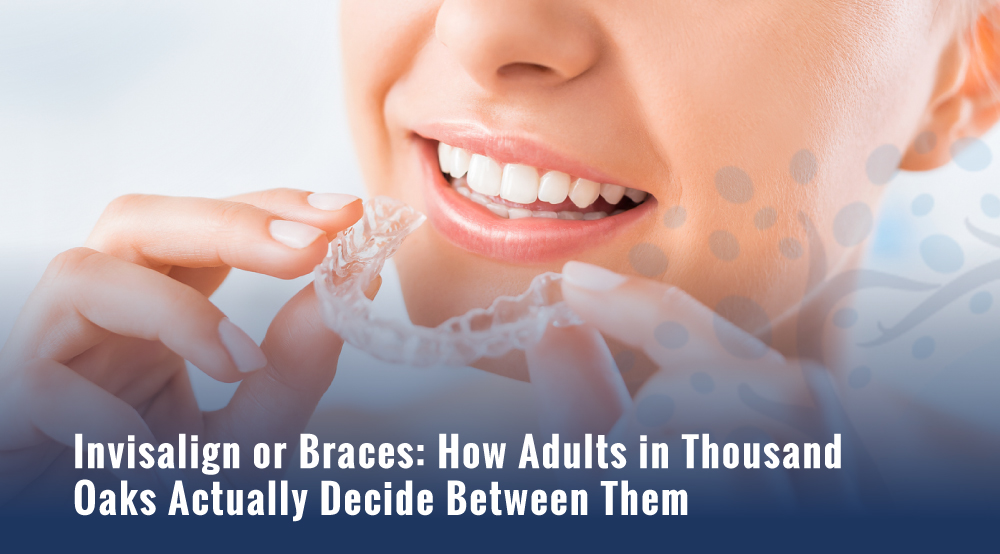
For adults considering teeth straightening in Thousand Oaks, choosing an orthodontic system involves more than deciding which one looks better. The amount and type of movement required, daily habits, treatment responsibilities, and oral health all influence the recommendation.
An Invisalign vs braces comparison should begin with what each system can predictably correct. Clear aligners provide a removable and less noticeable option, while fixed braces maintain continuous force without depending on the patient to follow a daily wear schedule.
Both Move Teeth with Controlled Force over Months, Not Weeks
Clear aligners and braces move teeth by applying controlled pressure. That force encourages the supporting bone and tissues to adapt gradually as the teeth shift into their planned positions.
Braces use brackets and wires, while aligners use a series of custom trays. Each aligner completes a small portion of the total movement before the patient advances to the next set.
Neither method can reposition teeth in a few days. Treatment typically takes months and may continue longer when the case involves significant crowding, rotation, spacing, or bite correction. Moving teeth too quickly can place the roots and supporting tissues at risk.
Adults searching for teeth straightening Thousand Oaks treatment should expect an examination, digital scans or impressions, photographs, and dental X-rays before receiving an estimated timeline.
Case Complexity Is the First Filter, Not Personal Preference
Appearance and convenience matter, but they cannot override the clinical requirements of the case. The dentist must first determine which systems can create the necessary movements safely and predictably.
Clear aligners can treat many mild and moderate alignment concerns. Some complicated rotations, substantial bite problems, or difficult vertical movements may require additional features or fixed braces.
An evaluation for teeth straightening in Thousand Oaks may consider:
- The Amount of Crowding or Spacing
- Tooth and Root Positions
- Upper and Lower Jaw Relationships
- Bite Alignment
- Gum and Bone Health
- Missing Teeth or Dental Implants
- Previous Crowns and Veneers
- Clenching or Grinding Habits
Some patients qualify for more than one option. Others may receive a recommendation based primarily on the amount of control needed rather than their preferred appliance.
Aligners Require Roughly 20 to 22 Hours of Daily Wear to Stay on Schedule
Clear aligners must remain in the mouth for approximately 20 to 22 hours each day unless the dentist provides different instructions. They are removed for eating, brushing, flossing, and drinking beverages other than plain water.
This leaves a limited daily window without the trays. Frequent snacking, long meals, travel, or forgetting to replace the aligners can reduce wear time and delay progress.
Patients interested in Invisalign Thousand Oaks treatment should consider whether this routine fits their normal day. Aligners only move teeth while they are being worn, and inconsistent use may prevent the next tray from fitting properly.
Removable trays also require organization. They should be cleaned correctly, kept in their case when removed, and changed according to the prescribed schedule.
Fixed Braces Remove the Compliance Variable Entirely
Braces remain attached throughout active treatment, so patients do not need to remember to put an appliance back in after eating. They continue applying force around the clock under the dentist’s supervision.
This makes braces useful for patients concerned about aligner compliance. Fixed appliances may also provide greater control for certain complex movements.
The tradeoff is that braces are more visible and require additional attention during brushing and flossing. Patients must also avoid foods that can bend wires or detach brackets.
Adults comparing adult braces alternatives should think honestly about their habits. A less visible system may be appealing, but it will not remain effective when trays are frequently left out. Braces are noticeable, but their success does not depend on remembering to wear them.
Attachments Make Clear Aligners Less Invisible Than Most People Expect
Clear aligner advertisements often show smooth, transparent trays. In actual treatment, many patients need small tooth-colored attachments bonded to selected teeth.
Attachments give the trays additional grip and help produce movements such as rotation, tipping, or vertical repositioning. Their size, shape, number, and location depend on the treatment plan.
Although they blend with the teeth, attachments can make aligners easier to notice at close range. Some cases may also require buttons, hooks, or elastics that increase visibility.
A clear aligners vs metal braces comparison should therefore consider relative visibility rather than assuming the aligners will be completely invisible. Clear trays are generally less noticeable, but the details of each case influence their appearance.
The Cost Difference Is Narrower Than Most Patients Assume
Many adults expect clear aligners to cost substantially more than braces. In some cases, the difference may be smaller than anticipated because both options require diagnostic records, treatment planning, monitoring, adjustments, and retainers.
The total cost depends on:
- Case Complexity
- Estimated Treatment Length
- Type of Appliance
- Number of Aligner Stages
- Need for Additional Refinements
- Required Office Visits
- Retainers and Follow-Up Care
An Invisalign vs braces cost comparison should include everything provided in the treatment estimate. Patients should ask whether records, replacement trays, refinements, emergency repairs, and retainers are included.
Insurance benefits vary. Some dental plans provide orthodontic coverage, but age limits, lifetime maximums, deductibles, and exclusions may apply.
Retention Is Required Long Term Regardless of Which Route You Take
Teeth naturally tend to shift after orthodontic treatment. Retainers hold them in their corrected positions while the surrounding bone and tissues adapt.
Retention is required after both braces and clear aligners. Depending on the case, the dentist may recommend removable retainers, a fixed wire behind the teeth, or a combination of the two.
Patients may begin by wearing removable retainers for most of the day before transitioning to nighttime use. Long-term nighttime wear is often necessary to reduce the risk of crowding, spacing, or rotation returning.
People researching orthodontics Westlake Village or Thousand Oaks should include retention when considering the total commitment. Active treatment eventually ends, but maintaining the result remains an ongoing responsibility.
Frequently Asked Questions
Are clear aligners always faster than braces?
No. Treatment time depends on the type and amount of movement required. Clear aligners can efficiently treat many cases, but inconsistent wear can extend the schedule. Braces may provide more predictable control for certain complex movements.
Can adults with crowns or veneers receive orthodontic treatment?
Many adults with existing restorations can have their teeth straightened. The dentist must evaluate the condition of the crowns or veneers and determine how attachments or brackets can be bonded. Dental implants cannot move, so their fixed positions must be incorporated into the plan.
Which option is easier to keep clean?
Clear aligners can be removed for brushing and flossing, which allows patients to clean their teeth normally. Braces require special attention around brackets and beneath wires. Aligners must also be cleaned, and patients should brush before placing them back over the teeth.
Can Newbury Dental Group help me choose between aligners and braces?
Yes. Newbury Dental Group can evaluate the teeth, bite, gums, bone, and existing dental work before recommending a treatment system. Patients seeking teeth straightening in Thousand Oaks may qualify for clear aligners, braces, or more than one option.
Do braces provide better results than clear aligners?
Neither system automatically produces better results for every patient. Success depends on selecting an appropriate appliance, creating an accurate plan, and following treatment instructions. The right choice is the one capable of completing the required movements predictably.
Summary
An Invisalign vs braces decision begins with case complexity, followed by the patient’s schedule, habits, preferences, and budget. Clear aligners are removable and less noticeable but require approximately 20 to 22 hours of daily wear, while fixed braces maintain continuous force without relying on patient compliance. Both systems require professional monitoring and long-term retainer use to protect the final alignment.
Teeth Straightening Near Me: Newbury Dental Group
If you live in the Thousand Oaks area, you need look no further than Newbury Dental Group for teeth straightening. Newbury Dental Group is a top dental clinic where you’ll receive the best of care. We offer expert services in both Invisalign and braces. Call today – (805) 375-9383.