
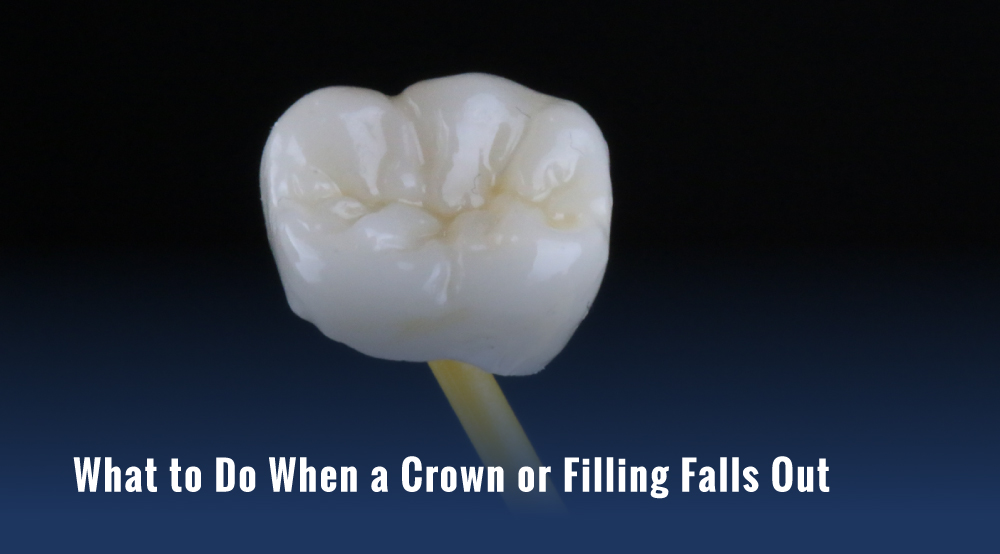
When a crown or filling comes out, save the restoration if you can, gently clean your mouth, avoid chewing on the affected tooth, and contact a dentist promptly. The tooth underneath may be sensitive or vulnerable to additional damage, even when it does not hurt immediately.
If a crown fell out, do not use household glue to put it back in place. Keep the crown in a clean container and bring it to your appointment because it may sometimes be possible to recement it. A lost filling also needs attention because the opening can expose weakened tooth structure to food, pressure, temperature changes, and bacteria. An emergency dentist in Thousand Oaks can determine whether the restoration can be repaired or whether the tooth needs a new filling, crown, or another treatment.
Why Crowns and Fillings Come Loose
Dental restorations withstand considerable pressure every day. Although they are designed for durability, they do not necessarily last forever.
A crown or filling can loosen because of:
- New decay around or underneath the restoration
- Wear that develops over time
- Biting hard foods or objects
- Teeth grinding or clenching
- Damage to the underlying tooth
- Breakdown of the bonding material
- An older restoration reaching the end of its useful life
Sometimes there are warning signs, such as sensitivity or movement. In other cases, a restoration unexpectedly comes loose while eating.
What to Do Immediately after a Crown or Filling Falls Out
First, remove the loose restoration from your mouth so you do not accidentally swallow or bite down on it.
If the crown is intact, place it somewhere safe. Gently rinse your mouth with lukewarm water to clear away debris, but avoid aggressive brushing around a painful or damaged area.
When a crown fell out while you were eating, check whether any portion of the underlying tooth appears to have broken with it. Even if everything appears intact, arrange an appointment rather than trying to permanently reattach the restoration yourself.
With a lost filling, avoid probing the opening with your tongue, toothpick, or other object. The remaining tooth may be more fragile than it appears.
How to Protect the Exposed Tooth until Your Appointment
An uncovered tooth can become sensitive to air, temperature, pressure, and sweets. It may also be more susceptible to breaking.
Until you can see the dentist:
- Chew on the opposite side
- Choose softer foods
- Avoid hard, crunchy, or sticky foods
- Keep the area clean
- Brush gently around the tooth
- Avoid extremely hot or cold foods if they trigger sensitivity
If you need a dental crown in Thousand Oaks, protecting the remaining tooth before the appointment can help prevent additional damage that could complicate treatment.
Temporary Fixes That Are Safe and Ones to Avoid
Over-the-counter temporary dental cement may sometimes be used as a short-term measure until an appointment, provided the product is used exactly as directed. Temporary filling materials are also available for certain situations.
These products are not substitutes for professional treatment.
Never use super glue, craft glue, or another household adhesive on a tooth or restoration. Do not force a crown onto a tooth if it does not seat easily or feels incorrect.
A temporary crown repair should only be viewed as a way to protect the area until professional care is available. If the restoration will not fit comfortably, keep it in a clean container and bring it with you.
When a Lost Crown or Filling Becomes a Dental Emergency
Not every missing restoration produces severe pain, but certain symptoms make faster evaluation particularly important.
Contact an emergency dentist in Thousand Oaks promptly if you experience:
- Significant or worsening tooth pain
- Facial or gum swelling
- Bleeding that does not stop
- A sharp or badly fractured tooth
- Severe sensitivity
- Signs of infection
- Trauma that caused the restoration to come out
A restoration that falls out without pain should still be addressed. Delaying treatment can give a damaged or exposed tooth more time to deteriorate.
Patients near Newbury Park who develop significant pain or swelling can also ask about emergency dental care in Newbury Park and nearby communities rather than waiting for a routine visit.
Repair or Replace: What Your Thousand Oaks Dentist Will Recommend
Whether a restoration can be reused depends on why it came out and what happened to the tooth underneath it.
If a crown is intact, still fits properly, and the underlying tooth remains healthy, recementing may sometimes be possible. If decay has developed underneath it, the tooth has fractured, or the crown no longer fits correctly, replacement may be necessary.
When a crown fell out because the underlying tooth broke, treatment depends on how much healthy structure remains. The dentist may need to rebuild the tooth before a new crown can be placed.
A missing filling may simply require a replacement filling when enough healthy tooth remains. Larger areas of damage may require an onlay or crown instead.
Getting Same-Day Care in Thousand Oaks
Same-day dental care can be particularly helpful when an exposed tooth is painful, sensitive, sharp, or vulnerable to further damage.
During the appointment, the dentist can examine the tooth and restoration, take appropriate X-rays when necessary, and determine why the restoration failed. Treatment may involve recementing a crown, replacing a filling, protecting the tooth temporarily, or beginning the process for a new restoration.
If you need a dental crown in Thousand Oaks, bringing the original crown with you can help the dentist determine whether it can still be used. The sooner the tooth is evaluated, the sooner you can stop avoiding that side of your mouth and reduce the chance of turning a manageable restoration problem into a more complicated repair.
Summary
A loose or missing crown or filling deserves prompt attention even when the tooth is not painful. Save a displaced crown, keep the area clean, avoid chewing on the affected side, and never use household glue as a temporary repair. An emergency dentist in Thousand Oaks can evaluate the exposed tooth, determine why the restoration failed, and recommend whether it should be recemented, repaired, or replaced.
Frequently Asked Questions
Can a dentist put my old crown back on?
Sometimes. If the crown remains intact, fits correctly, and the tooth underneath is healthy, it may be possible to recement it. Damage, decay, or changes to the tooth may make a new restoration necessary.
How long can I leave a tooth without its crown?
It is best to have the tooth evaluated promptly. An uncovered tooth may be sensitive and more susceptible to fracture, contamination, or additional damage.
Is a filling falling out always an emergency?
Not necessarily, but it should not be ignored. Pain, swelling, severe sensitivity, or significant tooth damage makes more urgent treatment important.
Can I eat normally if my crown comes off?
Avoid chewing on the affected tooth until it has been evaluated. Softer foods and chewing on the opposite side can reduce pressure on the exposed tooth.
Should I bring my crown to the dentist?
Yes. Keep it clean and bring it to your appointment. Even if it cannot be reused, seeing the restoration can provide useful information about what happened.
Emergency Dental Care Near Me: Newbury Dental Group in Thousand Oaks
Don’t let a dental emergency keep you in pain. If you live in the Thousand Oaks area, you need look no further than Newbury Dental Group for relief. Newbury Dental Group is a top dental clinic where you’ll receive the best of care. We have emergency and same-day services so call today – (805) 375-9383.